Recycling and Sustainability for Commercial Building Pressure Washing
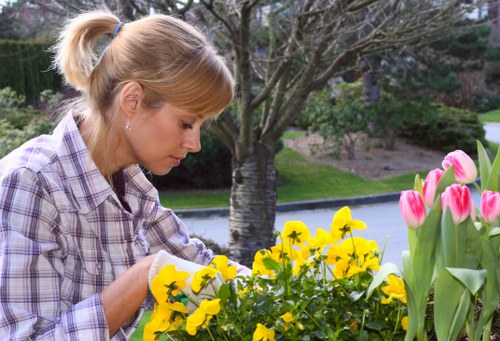 Commercial building pressure washing services today are expected to do more than restore facades — they must also protect the planet. Our approach to eco-friendly waste disposal areas and sustainable rubbish gardening areas is designed for large-scale exterior cleaning projects, focusing on minimal environmental impact and maximum resource recovery.
We prioritise creating a dedicated eco-friendly waste disposal area on-site for all pressure washing operations. This includes segregated containers, temporary settling tanks for washwater, and covered storage for recovered debris. The system is compatible with local authority expectations, including boroughs that operate strict waste separation schemes for glass, plastic, food waste and mixed recycling; we adapt our disposal streams to match local kerbside standards where applicable.
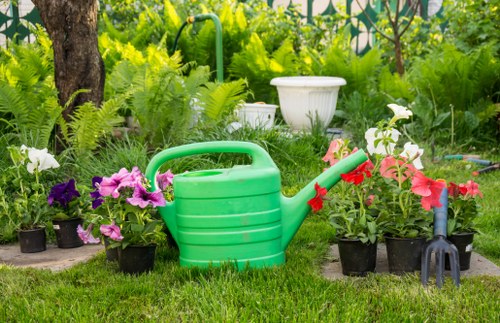
Targets, Transfer Stations and Local Partnerships
Our recycling percentage target for commercial pressure washing projects is to achieve at least 75% diversion of solid waste from landfill within the first year, moving to 85% through continuous improvement. We accomplish this by working with licensed transfer stations and local recycling centres, ensuring that separated materials such as metal fastenings, timber, plastic sheeting and general mixed recyclables are processed correctly. We maintain formal routes to nearby transfer stations and municipal facilities to reduce haul distances and cumulative emissions.
On-site Sustainable Rubbish Gardening Areas
Creating a sustainable rubbish gardening area complements exterior cleaning by turning captured organic and inert debris into a usable resource. In practice, this means:
- On-site composting bays for small volumes of organic matter recovered from landscaped setbacks and planters following pressure cleaning.
- Designated mulch and wood recycling piles where small timber and biodegradable landscaping waste can be processed into site landscaping materials.
- Secure storage for non-biodegradable debris pending transfer to certified recycling facilities.
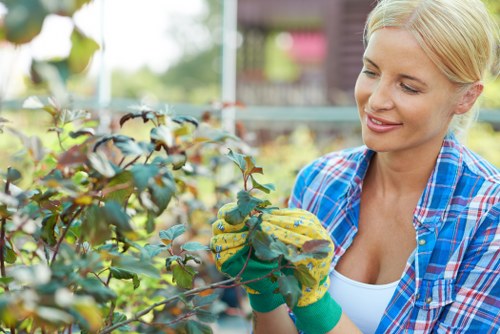 Our sustainable rubbish gardening areas are established with clear signage, colour-coded bins that mirror local borough recycling colours, and simple operating procedures for crews to follow — reducing contamination and improving recycling rates while supporting urban green spaces.
We document all waste streams for each commercial pressure washing contract, providing transparent records that detail volumes, recycling percentages and end destinations. This includes the categorisation of recovered solids (metal, timber, plastic), separation of hazardous from non-hazardous materials, and the capture and treatment of washwater solids in eco-friendly disposal zones. Such documentation supports client sustainability reporting and helps meet corporate environmental, social and governance (ESG) objectives.
To further lower environmental impact, our fleet strategy emphasises low-carbon vans and efficient logistics. Deploying hybrid and electric vans for equipment transport and small-scale site operations reduces tailpipe emissions. Route planning is optimised to make multiple drop-offs at local transfer stations or partner recycling hubs, cutting total mileage and pollutant output during a project.
 We also maintain collaborations with municipal authorities and suburb-specific recycling initiatives: in boroughs with advanced separation policies we align our commercial pressure washing waste handling to match local bins and collection schedules, ensuring compliance and higher recycling yields.
Partnerships with charities and social enterprises are key to our circular approach. Reusable items recovered from site — such as intact planters, non-hazardous fixtures and certain building materials — are assessed and, where appropriate, donated to local charities or community projects. These partnerships help extend the life of materials and support social value outcomes for the communities where we operate.
Operational best practices include training crews on waste separation, minimising single-use plastics on site, and adopting biodegradable cleaning agents wherever feasible. We encourage clients to incorporate our sustainable schemes into long-term maintenance plans for commercial building exterior cleaning, making green practices a standard part of property management.
 In summary, pressure washing for commercial buildings can be both effective and sustainable. By establishing an eco-friendly waste disposal area, creating a sustainable rubbish gardening area, setting ambitious recycling percentage targets, using local transfer stations, partnering with charities and running low-carbon vans, we deliver a cleaner façade and a cleaner footprint.